
Health & Safety
Dry Ice Safety Guide for Pakistan
Essential procedures for the safe handling, storage, transport, and disposal of solid carbon dioxide.
Dry ice at -78.5°C causes cryogenic frostbite within seconds of bare skin contact. It sublimates into CO2 gas that displaces oxygen in enclosed spaces and must never be stored in airtight containers. These three properties define all safe handling procedures.
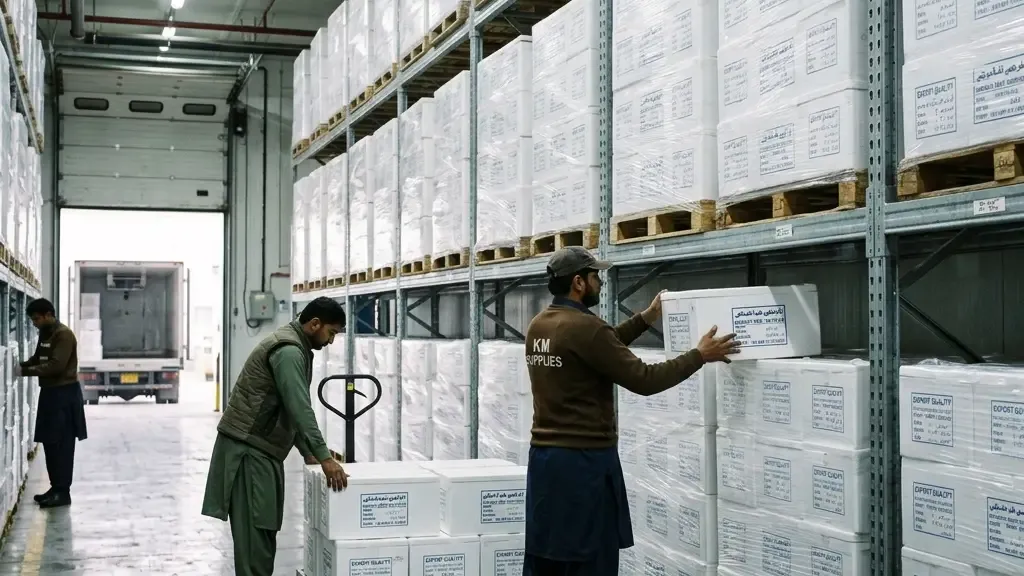
Required Personal Protective Equipment (PPE)
All dry ice handling requires specific protective equipment to prevent cryogenic burns and injuries.
Always wear thick, insulated cryogenic gloves rated for temperatures below -80°C. Leather or rubber gloves provide insufficient protection.
Dry ice can crack and project small fragments. Wear protective goggles or a full face shield whenever breaking or cutting dry ice.
Never move dry ice pellets or block fragments with bare hands. Use a metal or plastic scoop, or heavy-duty tongs.
If fragments fall, bare feet or sandals provide no protection against cryogenic burns. Wear closed-toe shoes or boots.
Safe Storage of Dry Ice
Never use airtight containers. CO2 expands up to 800 times its solid volume, building pressure rapidly and causing explosions.
Ventilated Containers
Dry ice must be stored in ventilated insulated containers with loose-fitting lids.
Room Temperature Only
Store dry ice in a ventilated room at ambient temperature. Do not place dry ice in a household freezer — it damages compressors and presents an asphyxiation risk.
Ventilation Requirements
In a small room, sublimating CO2 from 5 kg of dry ice can raise concentration to dangerous levels within 30 minutes. Active air movement is required.

Transport Safety Guidelines
Vehicle Ventilation
Never transport dry ice in a sealed vehicle cabin. CO2 gas accumulates, causing dizziness and unconsciousness. Always transport in an open truck bed or a well-ventilated cargo vehicle with windows open.
UN1845 Labelling
All commercial dry ice shipments in Pakistan must be labelled with the Class 9 UN1845 hazardous material designation. We include this on all bulk shipments.
Air Transport
Pakistani aviation regulations (PCAA) permit a maximum of 2.5 kg per passenger as checked baggage with airline approval. Commercial cargo requires designated UN1845 shipping containers.

Commercial Kitchens & Culinary Use
Never Ingest Directly
Dry ice must never be added directly to drinks intended for swallowing. Ingesting solid CO2 causes severe internal tissue injury. Use specially designed sealed containers for cocktail fog effects.
Kitchen Ventilation
Catering kitchens using dry ice for culinary presentations must maintain active exhaust ventilation to comply with Pakistan's Food Safety Authority guidelines.

Important Guidelines
Emergency, Disposal & General Safety
Critical guidelines for emergencies, safe disposal, and protecting vulnerable individuals.
How do I safely dispose of dry ice?
Leave unused dry ice in a ventilated outdoor area and allow it to sublimate completely into CO2 gas. Do not attempt to dispose of dry ice in rubbish bins, drains, or toilets.
Can I put dry ice in water to dispose of it?
Placing dry ice in water without ventilation generates significant CO2 gas rapidly. Always perform dry ice-water mixing in well-ventilated spaces, never in a closed sink or drain.
Is dry ice safe around children and pets?
Dry ice looks like fun, magical smoking snow, making it highly attractive to children. Never leave a cooler unattended. Swallowing dry ice is extremely dangerous and causes severe internal burns.
First Aid: What to do for skin burns?
Treat a dry ice burn similar to a heat burn. Run lukewarm (not hot) water over the affected area for 10-15 minutes. Do not rub the skin. Apply antibiotic ointment. Seek medical attention if the skin blisters.
First Aid: What to do for CO2 inhalation?
If someone experiences dizziness, shortness of breath, or blue lips while working near dry ice, move them to fresh air immediately. If symptoms persist, seek emergency medical attention.
Order Dry Ice Safely in Pakistan
We supply premium dry ice in properly insulated, ventilated containers with all required safety guidance and UN1845 labelling.